Victorian House Extension in Canterbury Conservation Area

The homeowners at 49 London Road, Canterbury, approached us shortly after purchasing the property, seeking to adapt the late-Victorian house - formerly used as a doctor’s surgery - into a home better suited to modern living.
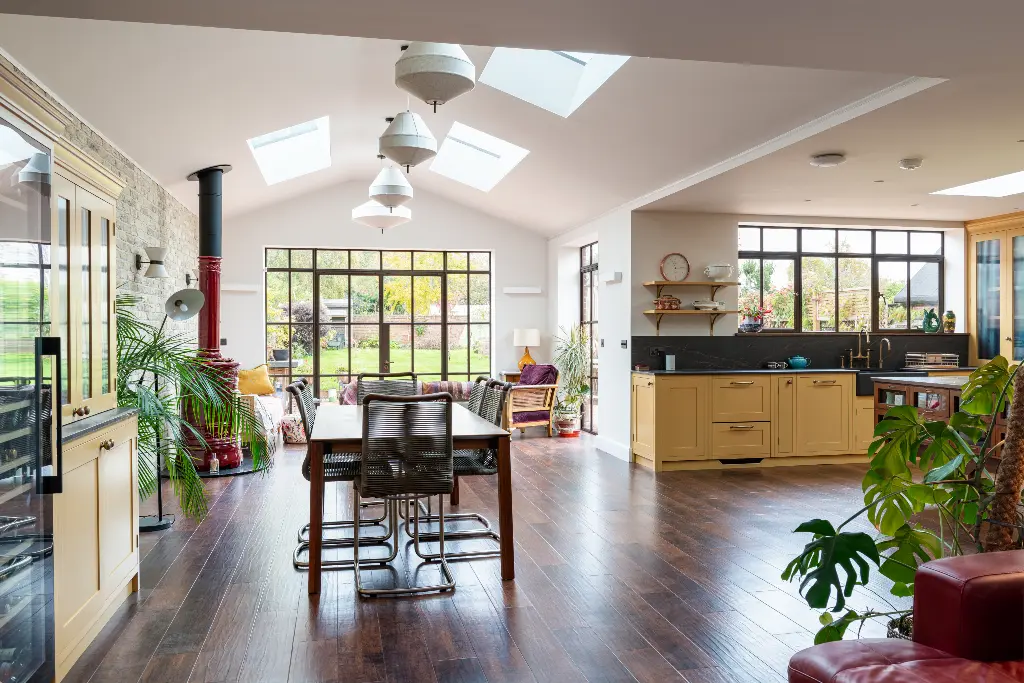
Our response was a carefully considered single-storey rear extension, combined with internal reconfiguration, to create a generous open-plan kitchen, dining, and living space connected directly to the garden.
49 London Road, A Victorian House in a Canterbury Conservation Area
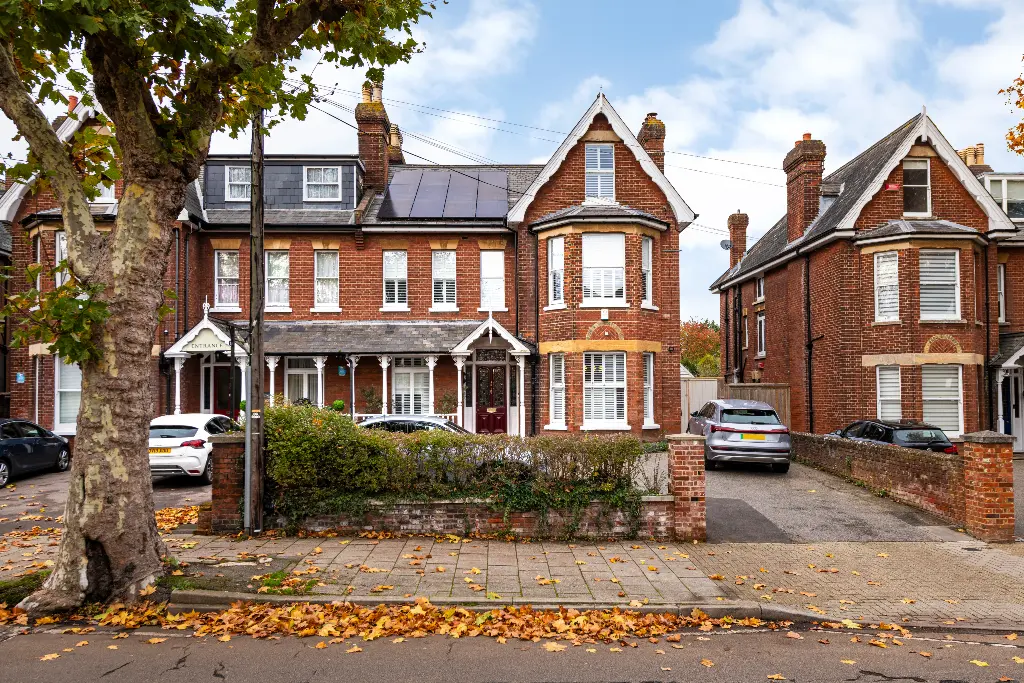
49 London Road is a semi-detached late-Victorian home located on one of Canterbury’s main historic routes, just outside the city walls and within the Canterbury London Road Conservation Area.
The area is characterised by generous plots, buildings set back from the street, and long rear gardens.
The house features typical Victorian suburban architectural elements, including red brick elevations, bay windows, stone lintels, decorative bargeboards, and prominent gables.
The building’s time as a doctor’s surgery left internal arrangements that no longer worked for everyday living. A small, modern rear addition also limited the ground floor's functionality, adding little usable space and weakening the house’s connection to the garden.
Although the property is not listed, its location within a Conservation Area and an Area of Archaeological Importance called for a discreet and sensitive design approach.
The Brief: Extending a Victorian House in a Conservation Area
The clients wanted to turn their new house into a comfortable, well-functioning home. While the upper floors already worked well, the ground floor felt fragmented and poorly proportioned, making everyday use unintuitive.
Their key priorities included creating a generous open-plan kitchen, dining, and living space, introducing a dedicated utility area with a WC, and improving the relationship between the house and the garden.
Given the property’s sensitive setting, the kitchen extension needed to sit comfortably alongside the Victorian house.kitchen
The Design: A Discreet Single-Storey Extension
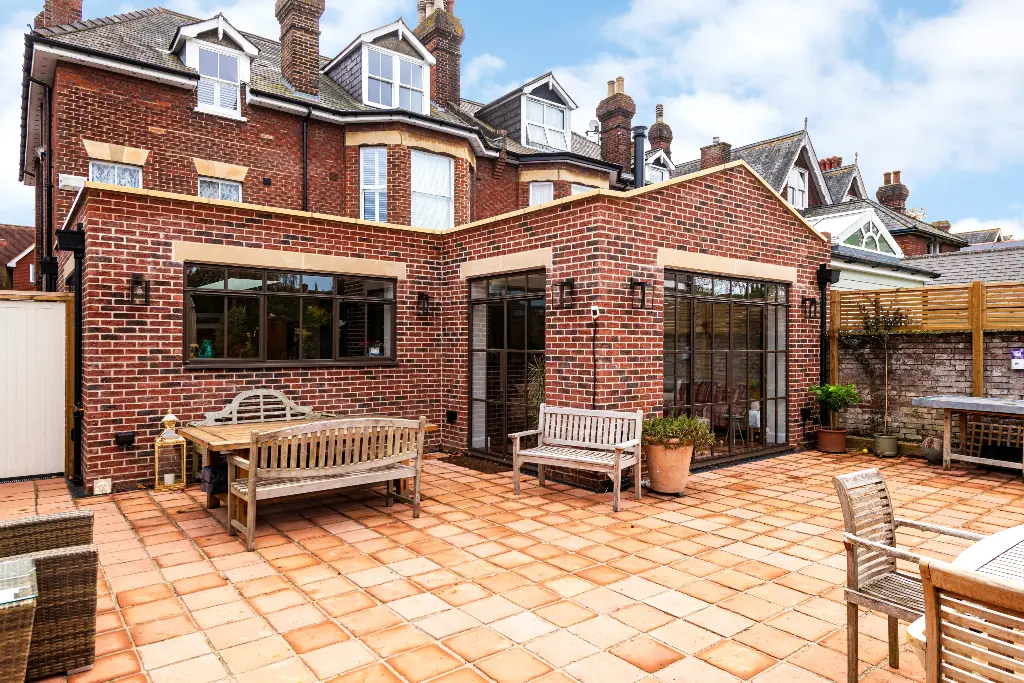
To stop the extension from drawing attention away from the main house, we kept it low and compact, tucked away to the rear within the existing building line, so it remains hidden from public view.
Alongside the kitchen extension, we reworked the ground floor by removing some internal walls to create a more intuitive layout.
The Victorian House Extension
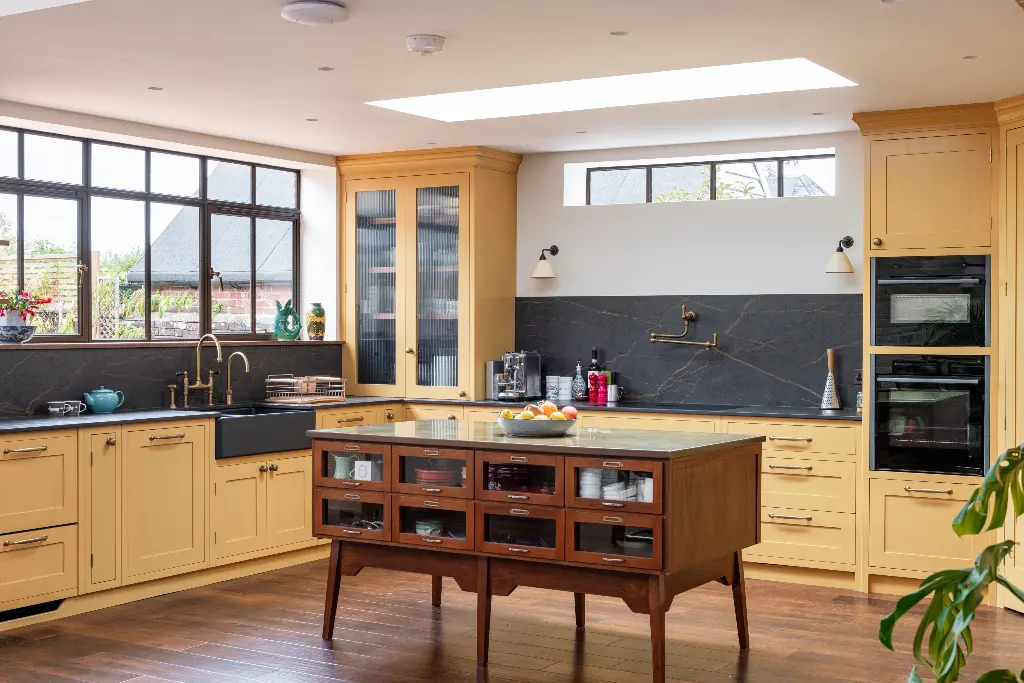
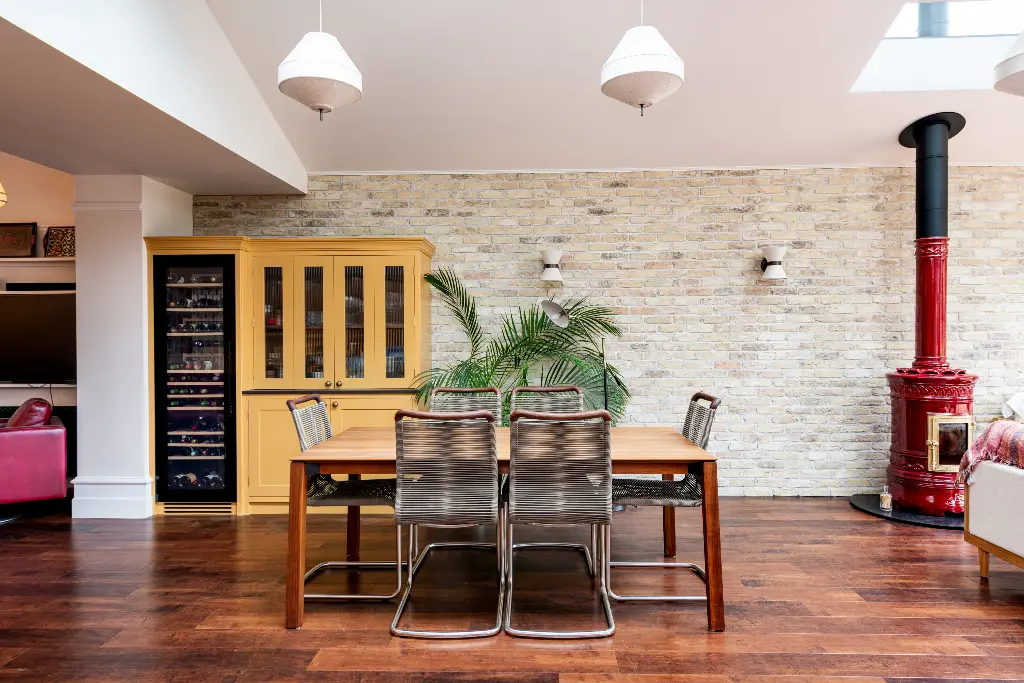
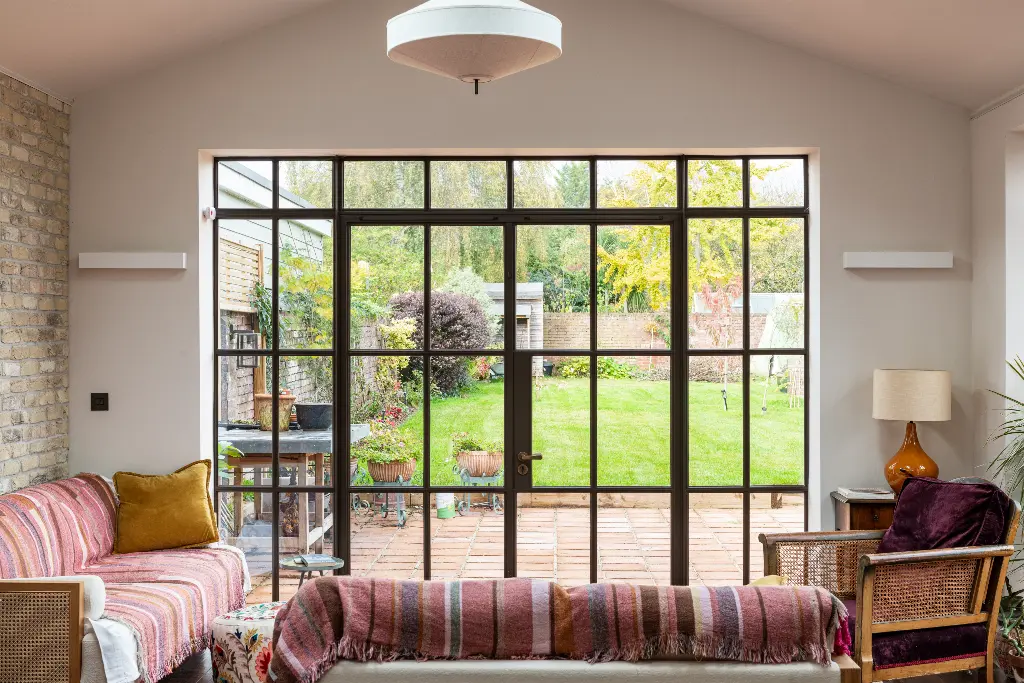
The expansion forms the heart of the transformed ground floor, providing a generous open-plan kitchen, dining, and living space that opens directly onto the garden.
A wood-burning stove acts as a focal point for the living area, while the layout supports distinct zones for cooking, dining, and relaxed seating.
We used a combination of a low-profile flat roof and a modestly pitched element to keep the extension discreet without compromising ceiling height. This solution also avoids interfering with the existing first-floor windows.
Finally, we introduced generous glazing, including bronze-coloured Crittall casement doors and windows, along with rooflights and high-level clerestory windows, to draw daylight into the space and connect it to the garden.
The Internal Alterations
We reworked several small, awkward rooms to improve circulation and make the ground floor easier to use.
We also repurposed the existing kitchen, which was narrow and out of proportion to the house, as a dedicated utility room with integrated storage and a WC.
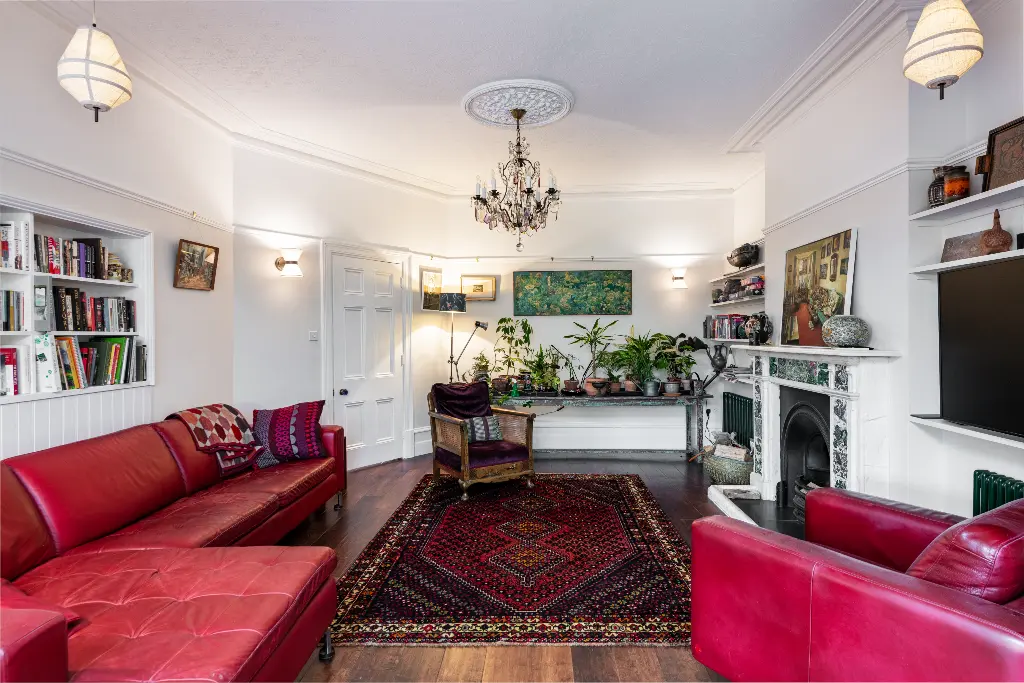
Prior to the build, the client reinstated the original living room to its full size by removing a WC and store, while we transformed the former dining room into a snug.
Together, these changes balance open-plan living with quieter, enclosed spaces.
The Materials
We carefully selected the materials palette to complement the Victorian house while giving the extension a more contemporary feel.
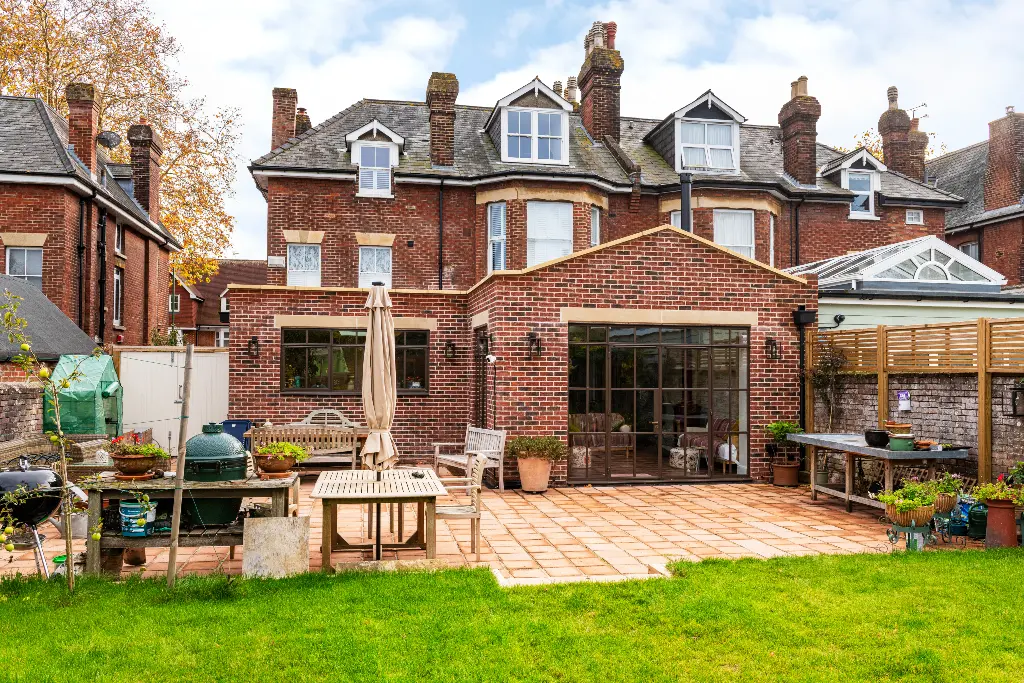
We used red stretcher-bond brickwork and stone lintels to match the original elevations, while a stone-coped parapet adds definition at roof level.
To introduce a subtle modern contrast, we chose bronze-coloured Crittall casement windows and doors. Their slender profiles and generous glazing reduce the perceived mass of the kitchen extension.
The Landscaping
We introduced hard landscaping to support the new extension and improve the connection between the house and its generous rear garden.
We added a new paved patio directly outside the open-plan living space to create a practical outdoor area for dining and everyday use.
At the front of the property, we widened the driveway and installed new gates to improve access and parking, given the house’s position on a busy route into the city.
Sustainability
Where possible, we retained and adapted the existing building fabric and carefully integrated new construction within the established envelope, improving day-to-day performance without unnecessary intervention.
We introduced underfloor heating across the ground floor to support efficient, even heat distribution.
To maximise natural daylight and reduce reliance on artificial lighting, we added rooflights and high-level clerestory windows to the extension.
Finally, we retained the existing oven in the new utility room, reusing a serviceable appliance and adding useful secondary cooking space
The Planning Process
Because there was a strong precedent for similar extensions on London Road, we did not seek pre-application advice. The planning process progressed smoothly, and the Council granted planning permission with no design changes required.
The site sits within an Area of Archaeological Importance, so the Council required archaeological investigations as a condition of consent. While this added pressure to the process, our team coordinated the investigations and promptly discharged the related planning conditions to minimise delays.
The Works
The clients appointed a contractor we recommended, whom we’ve worked with many times before and know consistently delivers high-quality results.
Throughout the build, we oversaw the works and acted as Contract Administrator, carrying out weekly site visits to monitor quality, progress, and compliance with the approved design.
Construction was completed in July 2025.
The Client’s Feedback
The clients were very pleased with the finished project, particularly the build quality and the level of communication throughout the process.
They also expressed their appreciation for the hard work and commitment of everyone involved in delivering the scheme.
Thinking of Extending a Victorian or Period Home in a Conservation Area?
James Clague Architects is part of Latchmere House, a multidisciplinary collective bringing together architects, engineers, surveyors, interior designers, and property specialists under one roof.
From our studios in Canterbury and Tunbridge Wells, we work across Kent, Sussex, Surrey, and the South East, delivering carefully considered expansions in Conservation Areas and other sensitive settings.
Whether you’re planning a Victorian house extension or reworking an existing layout to suit modern living, we can guide you through the planning process, prepare robust applications, and support delivery with experienced contractors.
To discuss your project, book an initial consultation or call 01227 649073.
Our team of specialist architects offer a completely free and no-obligation telephone consultation to discuss your project, explain the process and how we can help.