How To Add A Glass Extension To A Grade II Listed Building

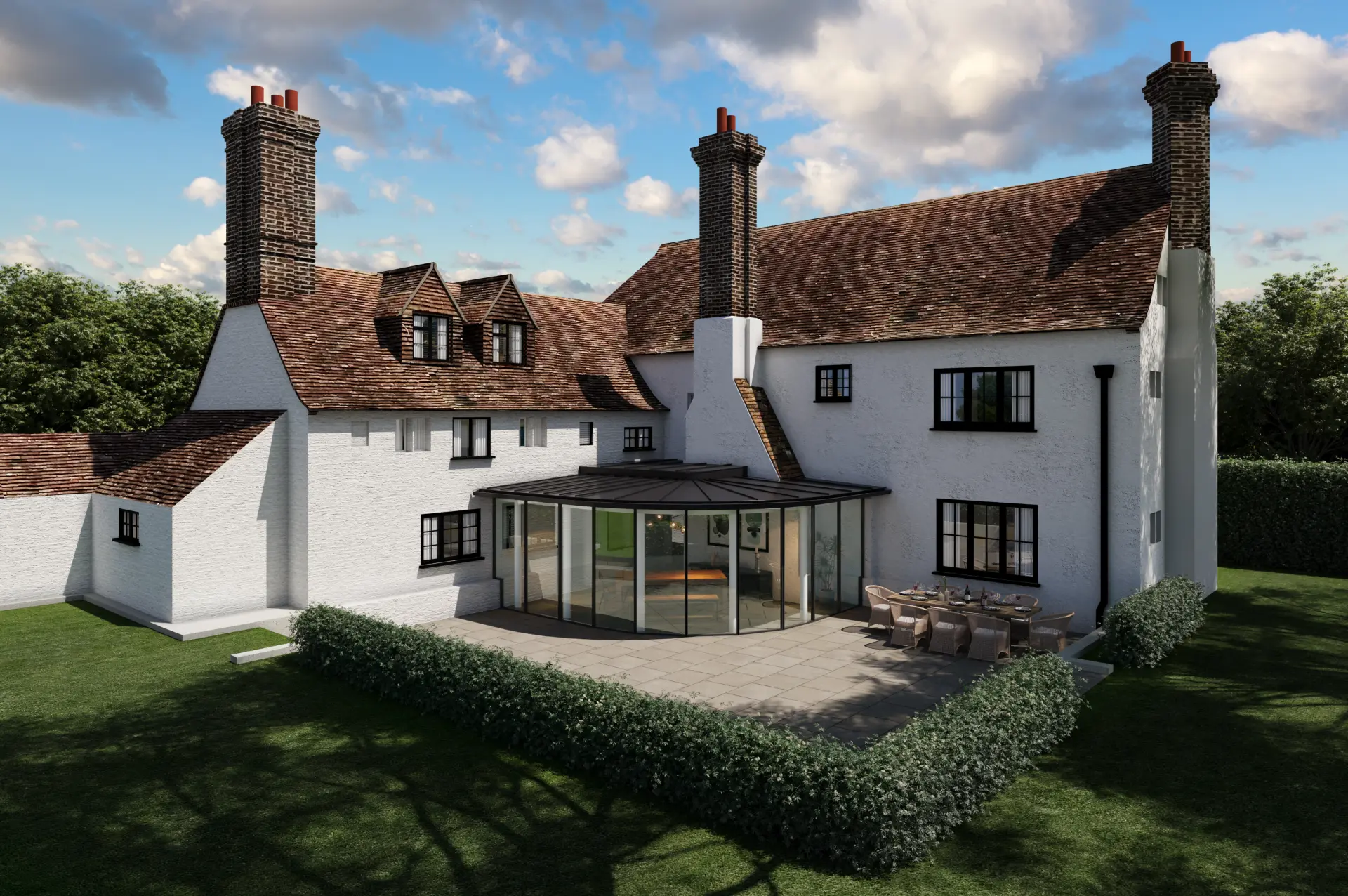
Can You Add A Glass Extension To A Listed Building?
Yes. You can add a glazed extension to a listed building, as long as you obtain planning permission and listed building consent.
Glass extensions are a popular way to bring light and openness to historic homes. When thoughtfully designed, they can integrate seamlessly with a Grade II listed building without competing with the character that makes the property significant.
To secure approval, you’ll need a clear justification for the extension and a proposal that responds sensitively to the building’s historic fabric. We’ll cover this in more detail later.
If you’re exploring options beyond a glazed extension, take a look at our guide to extending a Grade II listed building.
What Counts As A Glass Extension?
A glass extension is an addition built primarily of glass. Most feature large panes, minimal framing, and lightweight junctions to create a visually light structure.
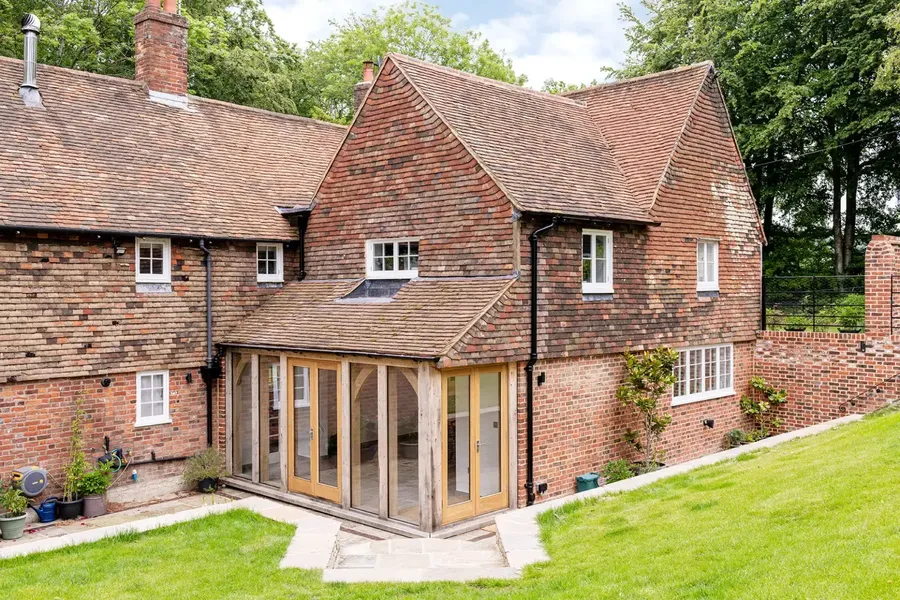
Glazed extensions can incorporate slim-profile aluminium or steel systems and structural glass assemblies for a modern look, or combine glass with supporting timber elements for a more traditional appearance.
A glazed addition is treated as a full-built development, so it must meet the same structural, thermal, and design standards as any other regulated construction.
How Much Glass Are You Allowed In An Extension?
Glazing in a new extension is typically limited to 25% of the extension’s floor area, excluding existing openings. You can exceed this if SAP or equivalent calculations show the extension does not lose more heat than a standard compliant design.
The extension must also comply with other Building Regulations, including energy efficiency, structural safety, ventilation, moisture control, and fire safety.
Councils will balance these technical considerations with the heritage impact. For example, a glass box extension may be considered appropriate on a less sensitive elevation, provided it remains visually subordinate and leaves the historic fabric intact. On more prominent façades, they may prefer a mix of glazing and solid elements to reduce visual contrast.
Ultimately, the extent of glazing considered appropriate must be assessed on a case-by-case basis when considering an appropriate design for the building in question.
Do You Need Foundations For A Glass Extension?
Yes, a glass extension requires proper foundations, just like any other permanent structure.
These must provide adequate support for the glazing's weight, prevent movement, and protect the building from frost and ground instability. Even slim structural glass systems rely on a stable base to keep the panes aligned and ensure the addition performs safely over time.
New foundations must be positioned and sized to avoid weakening existing historic structures. Moreover, the groundworks strategy must protect the historic fabric - excavation should avoid damaging original walls, footings, or drainage systems.
Sites with archeological remains might require lighter-touch options, such as pad foundations or discreet steel supports.
Do You Need Planning Permission For A Glass Extension?
Yes. Listed buildings do not benefit from permitted development rights, so any extension, regardless of size or design, requires formal approval.
This allows the local council to assess the impact of the work on the building’s historic fabric, setting, and overall character.
In most cases, you will need to submit both a planning application and a listed building consent application. Planning permission considers the proposal in the context of the site and the surrounding area. Listed building consent assesses how the extension affects the building’s historic fabric and the features that define its special interest.
Submitting the applications together is usually the most efficient route. It allows the council to consider the design and heritage justification simultaneously, reducing the risk of conflicting feedback. It also helps ensure that conditions on materials, glazing systems, or junction details are agreed from the start.
Getting Listed Building Consent For A Modern Glass Extension
The first step is preparing a Heritage Statement. This should outline what makes the building significant, identify the features that contribute to its special interest, and provide a clear assessment of how the extension will affect those elements. Listed building consent applications are complex and assessed on a case-by-case basis. For a detailed explanation of the process, read our guide here.
Alongside the Heritage Statement, you will need to submit detailed architectural drawings, material specifications, and junction details. Councils expect to see exactly how the additional wing will connect to the historic building, how the glazing systems will be installed, and how the proposal will avoid unnecessary loss or alteration of the historic fabric.
A clear design rationale should accompany these documents. It should explain the thinking behind the proposal and demonstrate how it respects the building’s significance.
The council will evaluate the scheme by weighing any potential harm against the benefits it brings to the home, such as improving day-to-day usability or bringing underused areas back into regular use.
A well-prepared, heritage-led application gives your proposal the strongest chance of approval.
How to Design a Glass Extension for a Listed Building
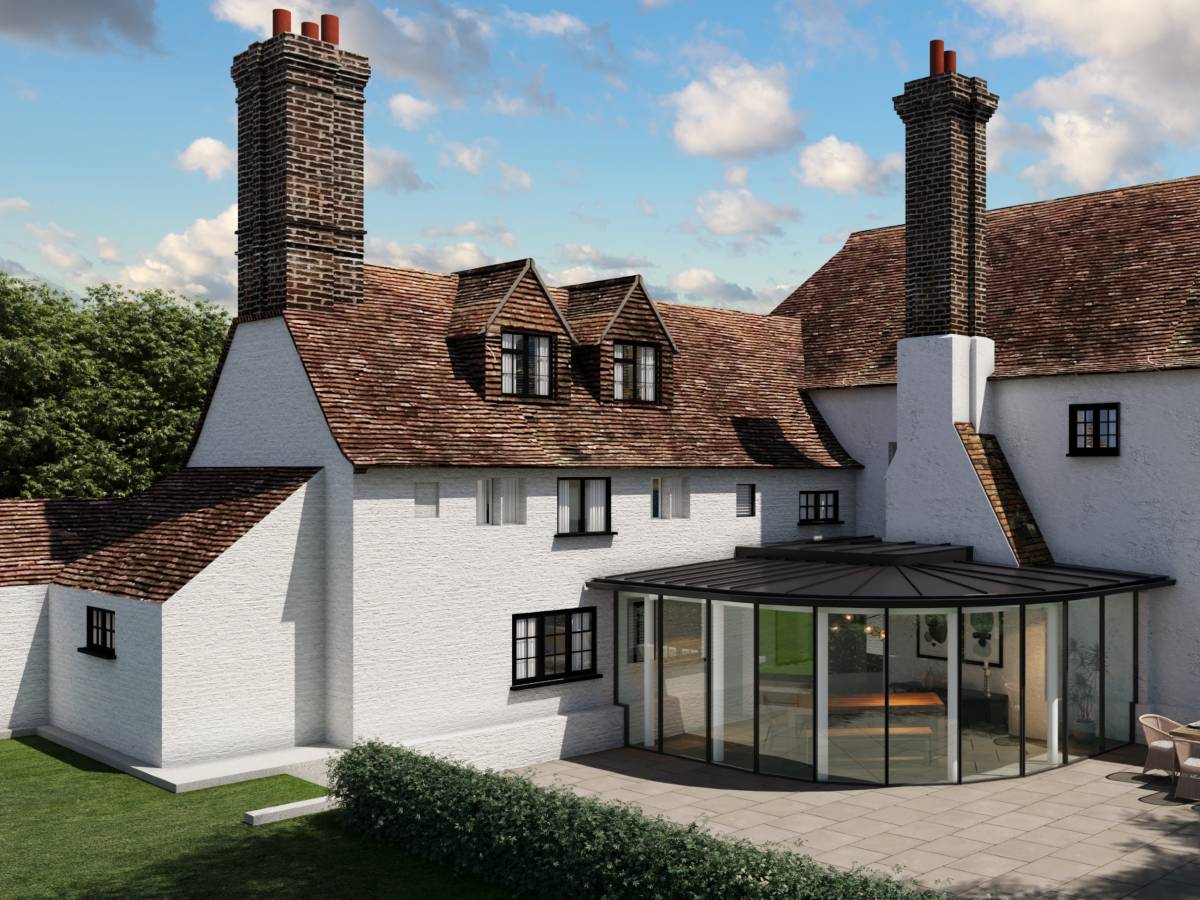
Respecting the building’s age, historic fabric, and character is essential when designing a listed building glass extension.
Transparency is often the starting point. Generous glazing keeps the addition visually light, so the historic building remains the primary focus. This also helps the addition read as a distinct, contemporary layer. For more traditional schemes, glass can be combined with a timber frame, but the historic fabric should remain dominant.
Positioning and massing are just as important. Listed building extensions are usually placed on secondary elevations, away from the most significant façades. Keeping the addition low and avoiding interruptions to established rooflines helps maintain the building’s proportions.
Finally, the scheme needs to be reversible. A well-designed glazed addition should be removable without causing lasting harm.
Common Constraints For Listed Building Glass Extensions
One of the main practical issues is limiting the number of safe attachment points.
Junctions must avoid cutting into, obscuring, or loading the masonry or timber, and historic walls often cannot take heavy fixings. This usually calls for lightweight structural solutions, independent support posts, or carefully designed steelwork. Wherever possible, structural supports should be designed to remain independent.
As we mentioned above, thermal performance is another key consideration. Because large areas of glazing must meet the energy-efficiency requirements of Part L, the design must manage heat loss, prevent condensation, and control solar gain. To meet these requirements, additional wings typically feature high-performance glazing, discreet framing systems, and careful detailing around junctions to minimise energy loss.
If the property is within a conservation area, additional constraints may apply. The council might ask you to position the extension in a less visible location, or adjust its scale or the glazing’s reflectivity so it fits comfortably within its surroundings.
Are You Thinking Of Adding A Modern Glass Extension To Your Listed Building?
Choosing the right team of experts is essential when working with listed buildings.
Sensitive design, careful detailing, and thorough preparation of planning and listed building consent applications are key to securing approval. A team experienced in heritage-led projects can guide you from early feasibility to final construction, helping you navigate policy requirements and avoid common pitfalls.
At James Clague Architects, we specialise in listed building projects and navigating complex planning contexts.
Our Canterbury and Tunbridge Wells studios serve homeowners across Kent, Sussex, Surrey, and the South East, supported by a collaborative group of engineers, surveyors, interior designers, and property specialists based at Latchmere House.
We can help you assess the potential of your home, prepare well-structured applications, and connect you with contractors who understand the demands of sensitive and heritage-led construction.
To discuss your project, book an initial consultation or call 01227 649073.
Frequently Asked Questions
Are glass extensions suitable for listed buildings?
Often, yes. Glass can create a lightweight, contemporary addition that allows the original building to remain the main focus.
Can you add a frameless glass extension to a listed building?
Sometimes. Frameless and structural glass systems can be used on listed buildings, but the design must be carefully considered and approved by the Local Planning Authority.
What makes a glass extension more likely to gain approval?
Extensions that are visually lightweight, clearly separate from the historic building, and minimise harm to historic fabric are usually viewed more favourably.
Quick Answers
Can you add a glass extension to a listed building?
Yes. You can add a glass extension to a listed building if you obtain planning permission and listed building consent.
Can you add a glass extension to a listed building in a conservation area?
Yes. However, additional planning controls may apply, and the council may request changes to the design, location, or scale of the extension.
Do you need planning permission for a glass extension?
Yes. Listed buildings do not benefit from permitted development rights, so planning permission and listed building consent are usually required.
What counts as a glass extension?
A glass extension is an addition built primarily from glass, usually with large glazed panels and minimal framing.
How much glass are you allowed in an extension?
Glazing is usually limited to 25% of the extension’s floor area, although this can sometimes be exceeded with supporting calculations.
Do you need foundations for a glass extension?
Yes. Glass extensions require proper foundations to support the structure and protect the existing building.
How do you design a glass extension for a listed building?
The extension should be lightweight, subordinate to the original building, and designed to minimise harm to historic fabric.
What are the main constraints when adding a glass extension to a listed building?
Common challenges include protecting historic fabric, limiting attachment points, meeting energy-efficiency requirements, and complying with conservation area policies.
We offer a free consultation to help assess what you're trying to achieve, how we can help and explain the process.
Is Renovating A Listed Building Worth It?
Listed Building Extension Ideas and Inspiration
Our team of specialist architects offer a completely free and no-obligation telephone consultation to discuss your project, explain the process and how we can help.