Listed Building Extension Ideas and Inspiration

6 Listed Building Extension Ideas That Work In Historic Settings
Listed building extensions do not have to follow a single formula. Depending on the building’s significance, setting, and layout, there are several ways to add space while respecting its historic character.
The projects below, drawn from our work across Kent, Sussex, Surrey, and the South East, demonstrate six design strategies that can work particularly well in historic settings:
- The glazed link
- The sympathetic additional wing
- The contrasting contemporary extension
- The part-sunken design
- The timber-framed addition
- Upgrading an existing extension
If you’re unsure whether an extension is permitted for your Grade II home, we cover that question here.

The Glazed Link
This approach works well because it creates a clear distinction between the historic building and the new addition while keeping the original structure visually dominant.
A glass link extension is often one of the most effective listed building extension strategies because it keeps the original structure clearly visible while allowing for a distinctly modern addition. This is important because it prevents any confusion about what is original and what has been added, protecting the authenticity of the historic building.
This approach is also practical. A glass link extension improves circulation and creates a small “buffer zone” where levels, insulation, and construction methods can change without forcing alterations to the protected building.
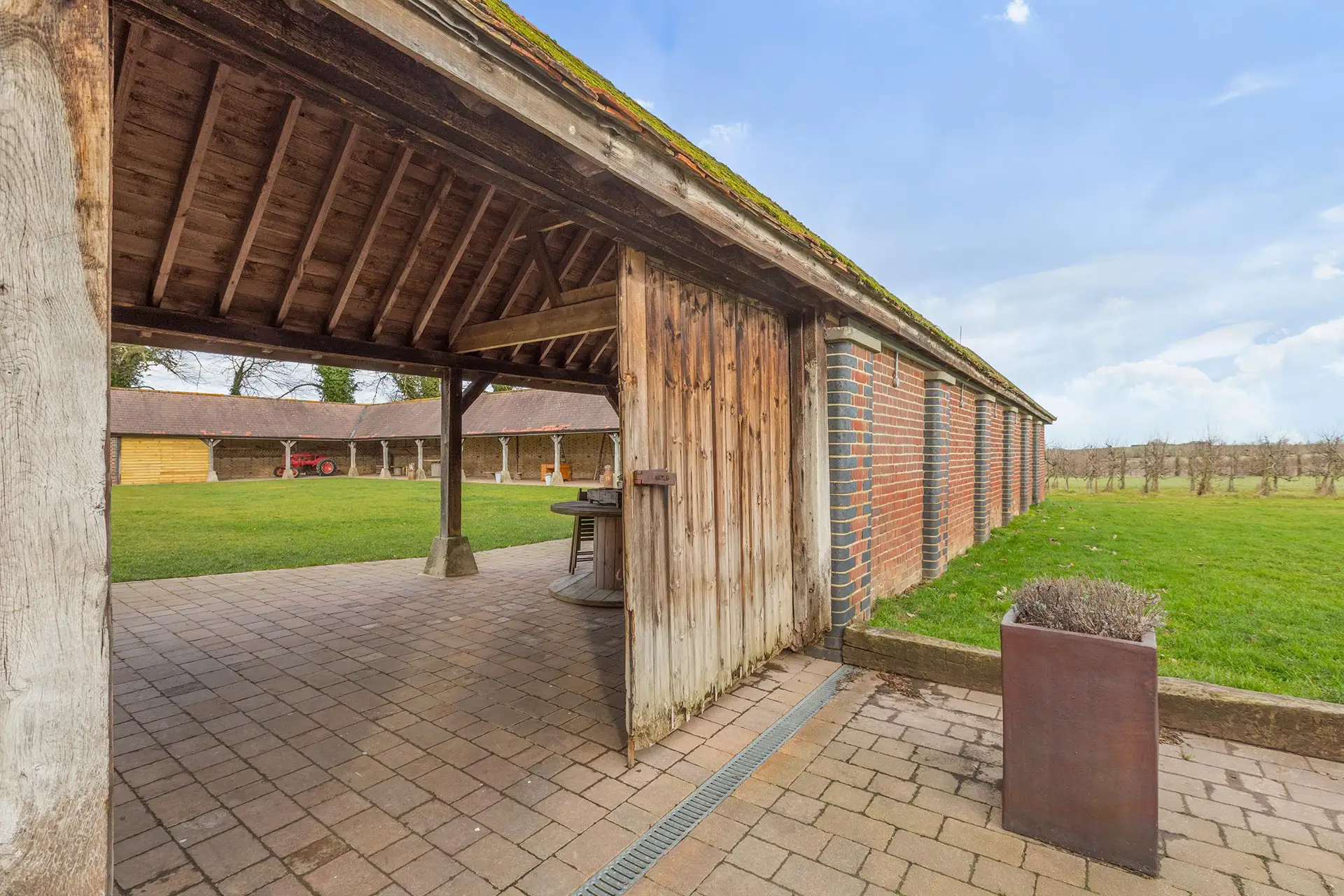
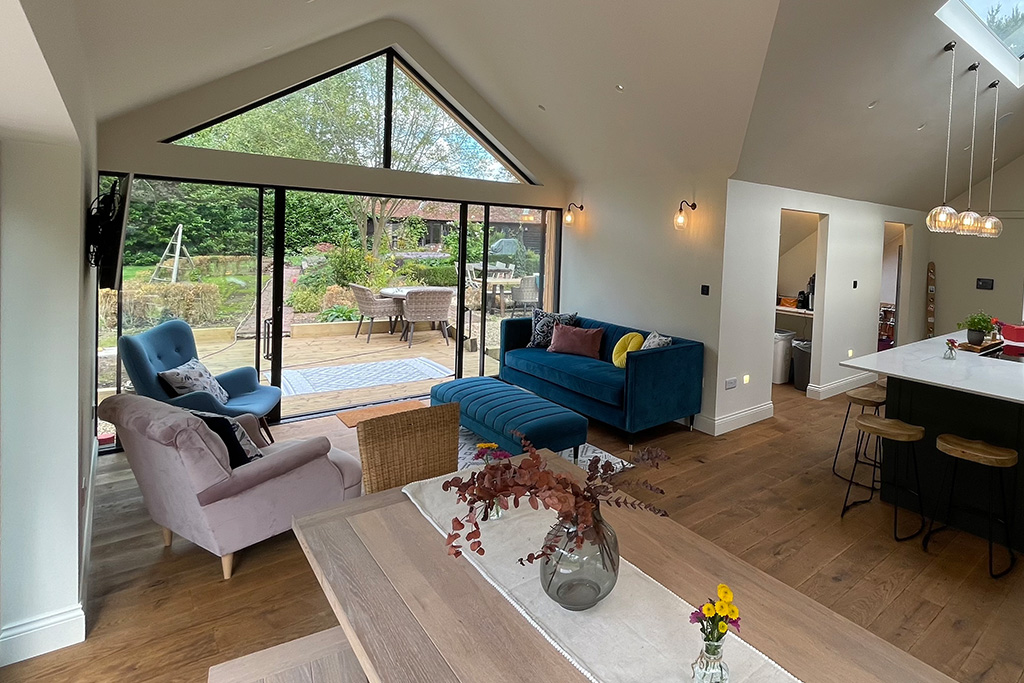
At Postern Forge, we designed a glazed link that connects the Grade II property to a contemporary single-storey wing. Because the link avoids covering or cutting into key elevations, the original character remains fully visible.
The addition features a catslide roof and large sliding doors on two sides, allowing abundant daylight to enter and blurring the line between indoor and outdoor living.
The extension is arranged in an L-shape, with an open-plan kitchen and dining area along the longer elevation. Roof windows bring additional daylight into the utility and pantry.
On the shorter side, this configuration creates a sheltered corner that naturally lends itself to a relaxed seating area. This opens onto a simple decked terrace, providing a private, sun-catching outdoor space.
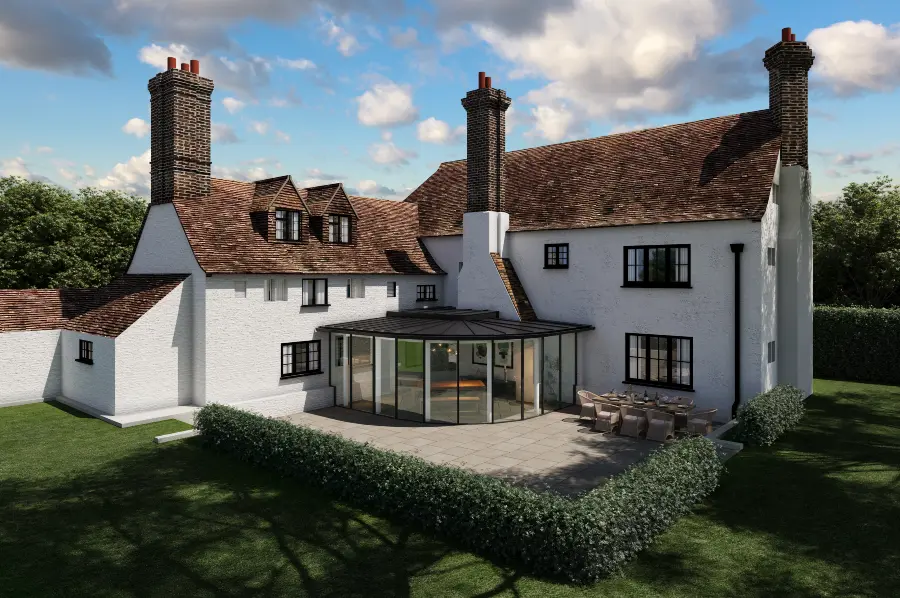
While glazed links are often the most discreet option, larger glazed additions can also work well in the right setting. Read our guide to glass extensions on listed buildings.

The Sympathetic Additional Wing
This approach works well because it provides substantial additional space while respecting the scale, proportions, and character of the original building.
Creating an additional wing is one of the most traditional and dependable listed building extension approaches. A carefully designed wing focusing on appropriate scale, proportion, and material harmony can add substantial space while maintaining the building’s character and overall form.
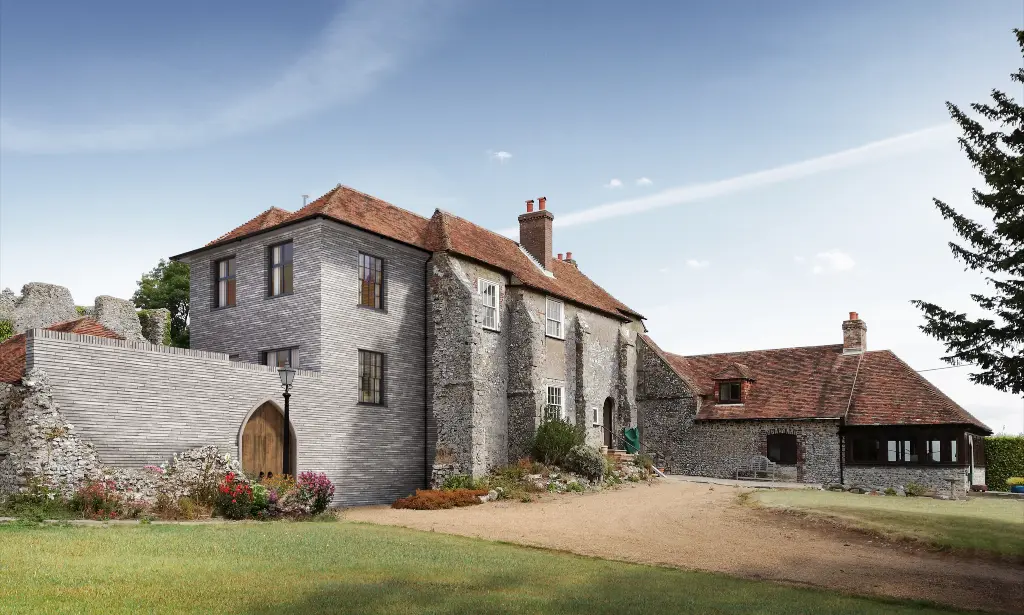
At St Radigund’s Abbey Farm, a listed farmhouse within a scheduled monument, we designed a two-storey wing that follows these principles.
The new volume is scaled to sit lower than the main house, with materials drawn directly from the surrounding historic context - flintwork, ragstone, handmade clay tiles, and slimline glazing that reflects the rhythm of the original openings. This ensures the addition feels rooted in its setting.
Inside, the wing allows for a more generous and flexible layout than the existing structure could provide. Larger rooms, improved circulation, and taller ceiling heights offer the kind of light, modern living spaces that listed buildings often struggle to accommodate.
The new interior connects smoothly to the historic rooms while providing the homeowners with space for contemporary family life.
The Contrasting Contemporary Extension
This approach works well because it allows the new addition to have its own identity without competing with the historic architecture.
A contemporary extension to a listed building can work exceptionally well when the goal is to bring in space, light, and modern functionality without altering the original architecture. By giving the new volume its own identity and managing its scale, the extension sits comfortably alongside the historic building.
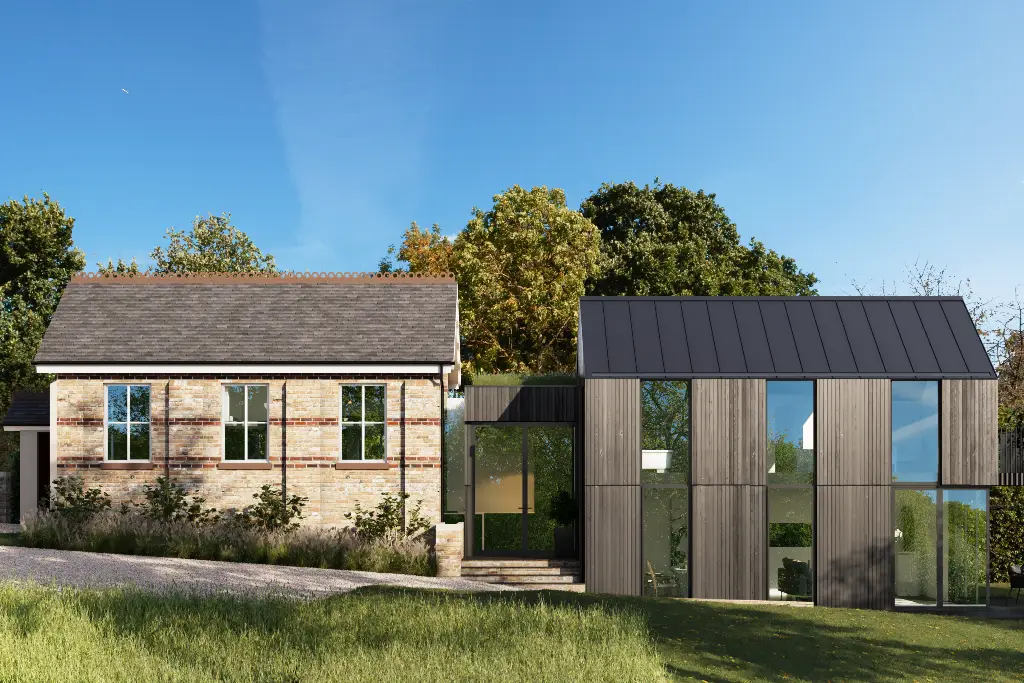
We used this approach at The Old Chapel. Although this is not a listed building, it is a period structure within a conservation area, so the project demonstrates how a contemporary extension can work in historic settings.
The extension is deliberately modern, featuring dark-stained timber cladding, a standing-seam roof, and a glazed link to retain the chapel’s original brick form.
Inside, the new volume offers a layout that older buildings rarely accommodate. A bright, open-plan living space with large windows connects directly to the garden, while the 1.5-storey height creates room for a comfortable bedroom upstairs.
The Part-Sunken Design
This approach works well because it reduces the visual impact of the extension while still creating meaningful additional living space.
Lowering part of an extension into the ground can be an effective way to keep a listed building’s character dominant while still adding meaningful space. By setting the new volume partly below existing ground level, the design reads as modest and unobtrusive, allowing the historic building to remain the primary focus.
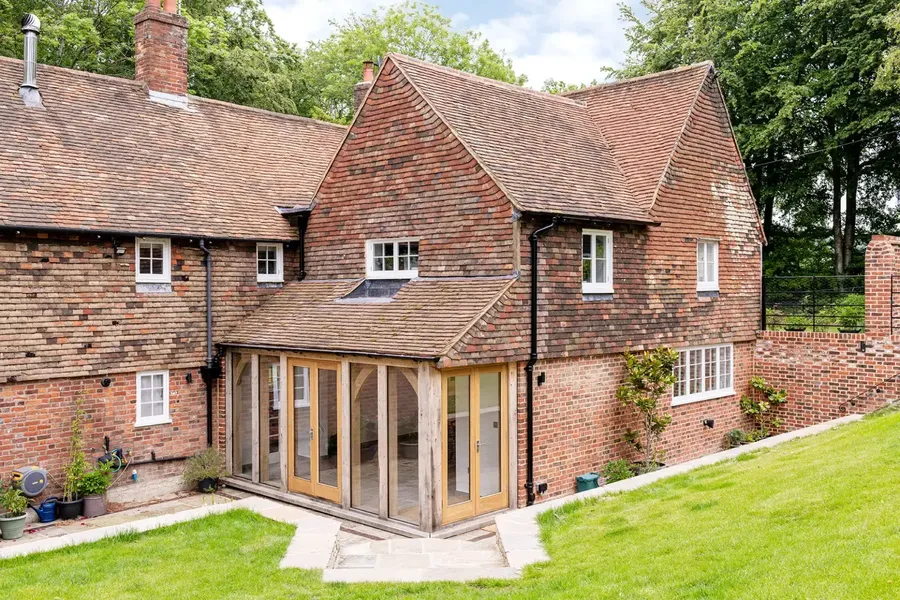
At this Grade II listed cottage in Canterbury, we set part of the two-storey extension into the ground to reduce its visual impact. We carried through traditional materials - including brick, tile-hung walls, peg clay tiles, and oak - from the original cottage, so the new volume blends seamlessly with the existing fabric.
Inside, the extension creates larger, lighter, and more functional rooms. On the ground floor, an open-plan kitchen and dining space faces the garden, while the upper floor accommodates a home office. The design also includes a small seating area next to the addition, shaped by terracing, new planting, and a rebuilt garden wall.

The Timber-Framed Addition
This approach works well because lightweight timber construction can add accommodation without overwhelming the historic building.
A timber-framed extension introduces new accommodation without the heavy structural requirements of masonry, making it well-suited to heritage settings.
We used this strategy at a Grade II listed Georgian house, where the family needed a more functional ground floor. The design introduced a new timber-framed wing alongside a series of carefully planned internal alterations.
Inside, the project focused on unlocking the potential of the ground floor. We relocated the kitchen to create a more cohesive family space, improved circulation throughout the plan, and added a new utility area to support everyday use.

The Upgrades To Existing Extensions
This approach works well because it improves the way a home functions while minimising changes to its historic fabric.
Sometimes the most effective way to expand a listed building isn’t to add a new form, but to upgrade and reorganise existing spaces to make them work for modern family life. Adapting non-original elements is a low-impact way to improve a listed home while protecting its historic fabric.
At The Chestnuts, a 16th-century Grade II listed farmhouse, we enlarged the existing conservatory to create a brighter, more usable living space. To do this, we designed a new porch built in ragstone, red brick, timber framing, and clay tiles.
Careful heritage analysis showed that the wall separating the kitchen and living room was not part of the original structure. This allowed us to remove it and create a more open, flowing ground-floor layout without affecting the building’s historic fabric. The result is a lighter, better-connected set of rooms that support modern everyday living.

Choosing the Right Extension Approach for Your Listed Property
No two historic homes respond to change in the same way. A successful listed building extension depends on understanding what makes the structure special - its materials, proportions, setting, and the surviving historic fabric that contributes to its significance.
That means each project will require a different strategy to increase your chances of gaining listed building consent.
If you’re considering extending a listed home, we can guide you through what’s possible.
James Clague Architects works alongside engineers, surveyors, interior designers, and property specialists at Latchmere House, giving clients access to a fully collaborative team.
From our Canterbury and Tunbridge Wells studios, we deliver projects throughout Kent, Sussex, Surrey, and the South East. We can guide you through planning, prepare detailed consent submissions, and introduce you to contractors with proven heritage experience.
To discuss your project, book an initial consultation or call 01227 649073.
We offer a free consultation to help assess what you're trying to achieve, how we can help and explain the process.
Is Renovating A Listed Building Worth It?
How To Add A Glass Extension To A Grade II Listed Building
Our team of specialist architects offer a completely free and no-obligation telephone consultation to discuss your project, explain the process and how we can help.