Barn Conversion Ideas: Inspiration For Modern Rural Living


Why Barn Conversions Are So Popular
As more homeowners seek characterful homes in rural locations, barn conversions are becoming increasingly popular across the UK.
With many agricultural buildings, including barns, cow sheds, and grain stores, lying disused or underutilised, they offer excellent opportunities to create unique homes. Their generous footprints, vaulted ceilings, and open interiors provide the flexibility needed for contemporary living while retaining the character of the original building.
The conversion process is also more accessible than many people realise. Under Class Q Permitted Development Rights, qualifying agricultural buildings can often be converted into homes without the need for full planning permission. If you’d like to learn more about the process, read our guide to agricultural barn conversions and Class Q permitted development.
In this article, we explore a range of barn conversion design ideas and real-world examples, showing how thoughtful architecture can unlock the full potential of these distinctive rural buildings.
When The Existing Structure Must Be Retained
When a barn is structurally sound, its external shell typically needs to be preserved to meet planning expectations.
In these cases, the goal is to celebrate the building’s proportions while reshaping the interior for comfortable modern living.
Key design approaches include:
- Celebrating the original height
- Exposing structural elements
- Keeping the linear plan
- Adding a mezzanine floor.
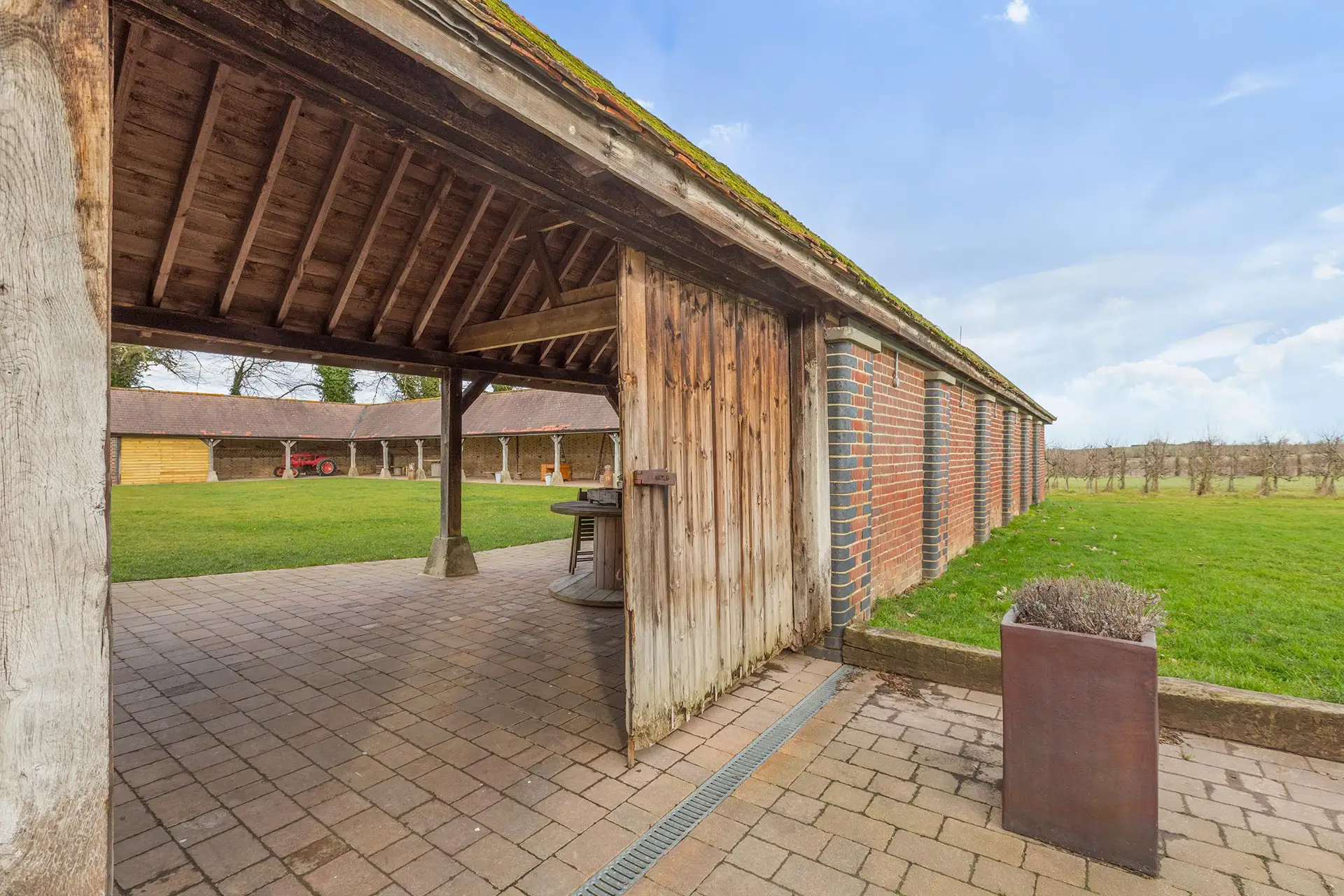
At The Barnyard, in Ash, we carefully adapted a historic agricultural building to create multiple residential units while preserving much of its original character.

Celebrating The Original Height
Double-height spaces are one of the defining qualities of traditional barns, as they reveal the scale and open volume that set these buildings apart. Keeping the impressive ceiling height and key features, such as large barn doors and tall openings, helps retain that sense of drama.
Pairing this vertical space with generous glazing creates brighter interiors, strengthens the connection to the landscape, and gives the main living areas a striking, modern feel.
Exposing Structural Elements
Elements like timber trusses, beams, and steel portals often tell the story of the barn’s past. Leaving them exposed gives the interior a sense of authenticity and reduces the need for invasive structural interventions.
They also pair naturally with minimal, contemporary finishes, creating a balanced aesthetic that feels both modern and true to the building’s origins.
Keeping The Linear Plan
Most barns follow a long, linear footprint. Retaining this form preserves the building’s agricultural identity while making planning more efficient, as rooms naturally arrange themselves along a simple spine.
Linear layouts also create strong sightlines from one end of the building to the other, helping the interior feel spacious and cohesive.
Adding A Mezzanine Floor
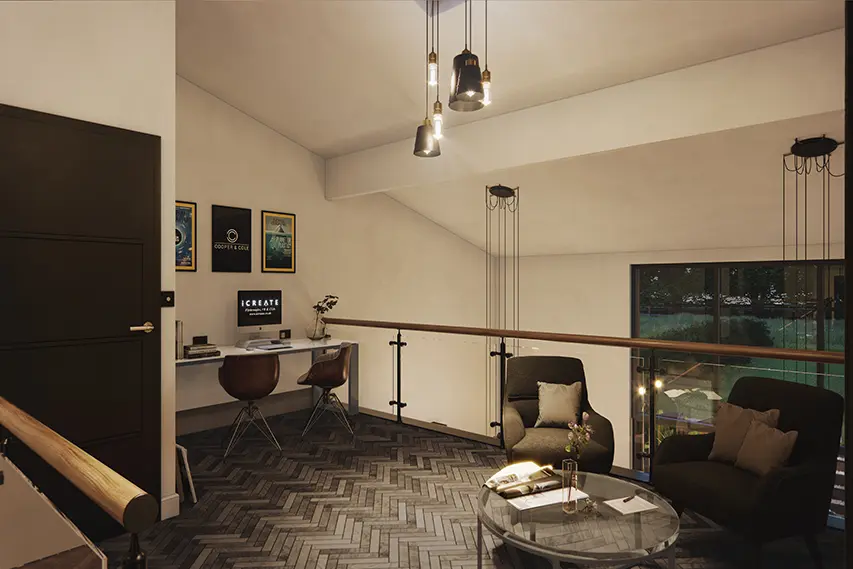
A mezzanine is an effective way to introduce extra living or working space without altering the barn’s external form. It makes use of the vertical volume, creating an elevated area that can work as a study, snug, or additional bedroom.
It works especially well in areas where the roof structure creates a natural focal point, allowing the upper level to sit beneath exposed trusses or a vaulted ceiling.
When positioned to overlook the main double-height living area, a mezzanine adds architectural interest, improves internal views, and keeps the space feeling open and connected.
When The Barn Structure Has Failed
When a barn is too damaged to repair or its structure cannot safely support conversion, rebuilding becomes the most viable option. This allows the original form to be reinterpreted while meeting modern standards for performance, layout, and sustainability.
It’s worth noting that projects like these fall outside Class Q Permitted Development Rights and require full planning permission.
Key design approaches include:
- Rebuilding the form with modern detailing
- Re-orientating the layout for light
- Creating protected courtyards.
Our Lodge Farm project in Marden demonstrates how a deteriorated agricultural building can be reinterpreted as a contemporary rural home while retaining the scale and character of the original barn.
Rebuilding The Form With Modern Detailing
Rebuilding the barn shell allows for improved insulation, airtightness, and structural integrity. The new build should echo the original structure’s proportions, while introducing crisp lines and high-performance materials.
This approach delivers a modern home that feels rooted in its rural setting.

Re-orientating The Layout For Light
When creating a new structure, you can position windows and openings where they will capture the best daylight and views, rather than being constrained by the barn’s original layout.
This freedom allows key living spaces to be organised around natural light, creating brighter rooms that feel more uplifting. It also strengthens the home’s connection to the surrounding landscape.
Creating Protected Courtyards
Rebuilding opens up the opportunity to design sheltered courtyards that enhance both the layout and day-to-day usability of the home. These spaces act as natural extensions of the main living areas, creating a comfortable outdoor dining space.
Courtyards also offer valuable privacy, help buffer wind exposure in open rural settings, and improve the overall flow between indoor and outdoor spaces, making the site feel more cohesive.
Barn Conversion Design Ideas That Suit Any Structure
Some design ideas work across almost any barn conversion, whether the project involves retaining the original shell or starting again with a new barn-like form.
These include:
- Framing countryside views
- Using a rural, textural material palette
- Open-plan living anchored by a feature kitchen
- Installing underfloor heating
- Integrating storage into the edges.
Framing Countryside Views
Connection to nature is a hallmark of contemporary rural homes, and barn conversions are uniquely suited to maximise it.
Orienting key living areas toward open fields or long views helps the landscape become part of the interior experience. Large windows, window seats, or glazed doors can draw the eye outward, making rooms feel larger.
Using A Rural, Textural Material Palette
Timber cladding, sheet metal, brick plinths, and other natural textures offer a modern reinterpretation of agricultural character without feeling pastiche.
These materials help bridge the gap between old and new, keeping the building visually tied to its rural context while introducing modern detailing.
Combining warm, textured surfaces inside, such as timber or limewash, with robust external finishes creates a cohesive aesthetic.

Open-Plan Living Anchored By A Feature Kitchen
The generous width and uninterrupted spans typical of barns make them ideal for combining cooking, dining, and living into one sociable room.
Open-plan layouts with a feature kitchen island work particularly well in barns, giving the space a natural focal point.
Installing Underfloor Heating
Underfloor heating removes the need for radiators, keeping walls free for storage, glazing, or feature materials and helping achieve a clean, modern look.
It also improves overall comfort by distributing heat evenly across large, open spaces.
Integrating Storage Into The Edges
Built-in storage along the perimeter walls keeps the central space clear, preserving the openness that makes barn conversions so appealing. Examples include full-height cabinetry, concealed utility areas, and integrated bench seating.
By keeping storage to the edges, you also maintain clean sightlines through the space and create a flexible layout that can adapt as your needs evolve.

How James Clague Architects Can Help With Your Barn Conversion
Designing a barn conversion requires specialist architectural expertise, as every structure comes with its own constraints, opportunities, and planning considerations.
At James Clague Architects, we work with self-builders, developers, and land owners to convert both small and large agricultural buildings across Kent, Sussex, and Surrey.
We take care of the whole process - from the initial survey and concept design to drawing a specification of works to describe the proposals to your preferred contractor - so you can focus on shaping the design.
James Clague Architects is part of Latchmere House, a collective of architects, engineers, interior designers, surveyors, and property specialists working under one roof.
To discuss your project, book an initial consultation or call 01227 649073.
We offer a free consultation to help assess what you're trying to achieve, how we can help and explain the process.
Is Renovating A Listed Building Worth It?
Listed Building Extension Ideas and Inspiration
Our team of specialist architects offer a completely free and no-obligation telephone consultation to discuss your project, explain the process and how we can help.